News
Water and energy pragmatism: transition to system integration in Central Asia
HowreportedPreviously, on April 25, 2026, the next quarterly working meeting of the ministers of energy and water resources of Uzbekistan, Kyrgyzstan, Kazakhstan and Tajikistan was held in Bishkek.
The focus of the heads of departments was on the issues of coordinating the operating modes of water and energy systems for the upcoming growing season of 2026–2027, as well as summing up the results of the autumn-winter season and measures to balance loads in the unified energy system of the region.
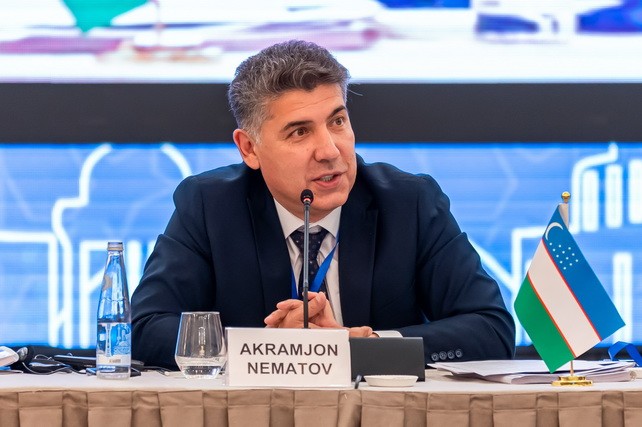
Commenting on the results of this important meeting, First Deputy Director of the Institute for Strategic and Interregional Studies under the President of the Republic of Uzbekistan (ISRS), Akramjon Nematov, emphasized that this event, despite its outwardly planned and technical agenda, deserves special attention.
In fact, it marks a deep qualitative turn in the building of interstate relations. According to the expert, this is a clear indicator that the process of institutionalization of a multilateral format of interaction is becoming sustainable in Central Asia, reflecting the fundamental readiness of upstream and downstream countries to find common ground on the most sensitive issues.
A. Nematov focused on the fact that the water and energy sector is ceasing to be a source of potential discord and is consistently transforming into a powerful factor in regional cooperation. It is important, the expert notes, that, contrary to pessimistic external forecasts that predicted water shortages as a source of conflicts in the region, in reality there is a high political responsibility.
With their systemic actions, the countries of Central Asia clearly refute theories about imminent “water wars,” demonstrating maturity and the ability to independently solve complex transboundary problems.
Analyzing the agenda of the meeting, the first deputy director of ISRS noted that the spirit of constructivism and pragmatism is establishing itself in the region: states are moving away from the logic of a “zero-sum game”, when the gain of one neighbor meant automatic damage to the other.
Instead, the formula of mutual benefit is taken as a basis, which is fully consistent with the region-wide trend towards strengthening good neighborliness and strategic partnership.
This approach is in demand especially today, when, in conditions of growing water scarcity, increasing demand for energy, and turbulence in the external environment, the parties maintain a pragmatic course, solve problems taking into account each other’s interests and create a unique environment of trust.
The expert considers the intersectoral focus of the current dialogue to be particularly important - the participation of simultaneously the heads of water and energy departments indicates not only an understanding of the inseparability of these sectors in the conditions of Central Asia, but also a willingness to look for mutually acceptable solutions that take into account the interests of everyone - from energy workers to farmers.
At the same time, Akramjon Nematov pointed out the need for further evolution of this process. Despite the fact that current annual and quarterly meetings work effectively as a sought-after ad hoc mechanism, today it is extremely important to move on to the full institutionalization of this dialogue. The interaction formulas used should be long-term, the expert believes.
On the basis of the already accumulated experience and established trusting practice, it is necessary to form long-term regulatory and legal frameworks that will become a solid foundation for regional stability.
To summarize, the First Deputy Director of ISMR summarized that water is a common resource and recognition of this fact requires from all participants not only joint management, but also a willingness to bear equal responsibility for its rational and fair distribution.
This, according to Akramjon Nematov, is the only guarantee of sustainable development and prosperity for all of Central Asia.
Source
